
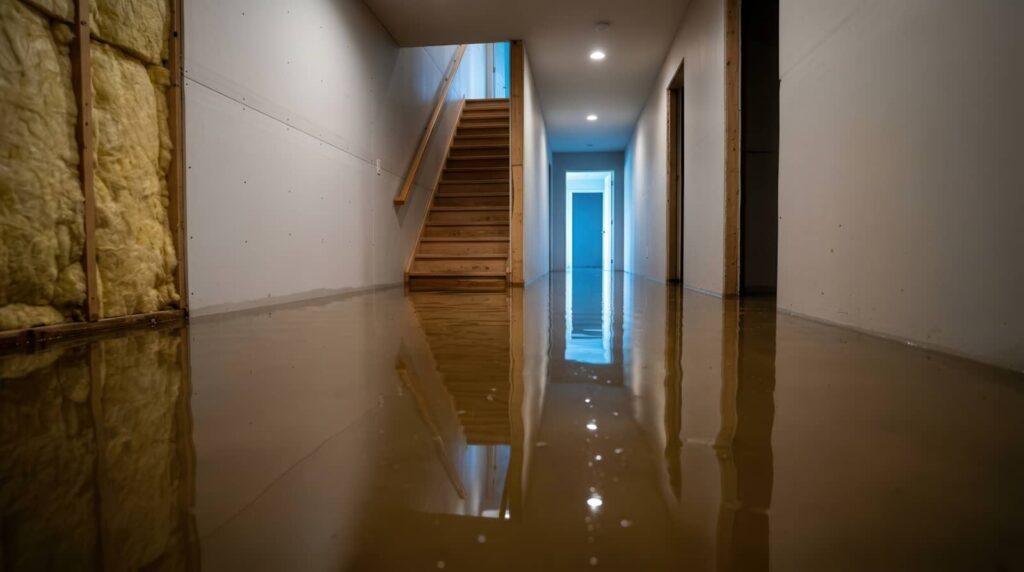
After a spring storm, you find 4 inches of water in your basement and the breaker panel is still live. You shut off power, check for sewage and hidden hazards, then start pumping water out safely. From there, you remove wet materials, push airflow through the space, and inspect structural damage before it spreads. The right sequence can limit losses, but one missed step can change everything.
Key Takeaways
- Shut off electricity and stop the water source immediately to prevent shock and further flooding.
- Wear protective gear and check for sewage, chemicals, or mold before entering the basement.
- Pump out standing water slowly, then remove soaked items and sort them for cleaning or disposal.
- Dry the basement with fans, open ventilation, and moisture checks to limit mold and hidden damage.
- Prevent future flooding by sealing foundation cracks and maintaining a sump pump backup system.
What to Do First After a Basement Flood?
As soon as you notice basement flooding, act fast: shut off electricity to the affected area if you can do so safely, then stop the water source if it’s accessible, and move people, pets, and valuables out of harm’s way.
Next, document the scene with photos for flood insurance claims, but keep yourself clear of standing water and unstable materials. Grab emergency kits, including flashlights, gloves, batteries, and bottled water, so your household can stay organized and calm.
If water is deep, contaminated, or spreading, contact a qualified mitigation team right away. You’re not alone here; quick, methodical action protects your home and helps your community recover together.
Avoid using appliances, and don’t track water into clean spaces.
Shut Off Power and Stop the Water
If it’s safe to do so, cut power to the flooded area at the main breaker or the affected subpanel before you enter standing water, because water and electricity create an immediate shock hazard.
Next, stop the water at the source: close the main supply valve, then isolate any fixture valves if you can reach them without exposure. If you can’t identify the shutoff, call emergency contacts now and stay out of the area.
Keep your safety precautions simple and disciplined—wear insulated footwear, avoid metal tools near moisture, and don’t reset breakers until a qualified electrician inspects the system. You’re protecting your home and everyone in it by acting methodically.
Once the flow stops, document which valves and circuits you’ve shut down so you can restore service safely later.
Look for Sewage, Mold, and Other Hazards
Now that the water is off, inspect the basement for sewage, chemical odors, or visible mold before you start cleanup, because these hazards change how you should proceed.
If you notice sewage contamination, treat the area as unsafe and keep people and pets out. Wear gloves, boots, and a respirator rated for particulates when you check surfaces, insulation, and stored items.
Look for discoloration, fuzzy patches, peeling materials, and damp drywall, since mold growth can begin within 24 to 48 hours.
Ventilate the space if the air is clear, but don’t spread spores or fumes with fans near contaminated areas.
Document what you find so you can share accurate details with your cleanup team and feel confident taking the next step together.
Pump Out Standing Water Safely
Once you’ve confirmed the basement is free of obvious sewage or chemical hazards, pump out standing water slowly so you don’t damage the foundation or electrical systems.
Use pump types suited to the depth and volume: a submersible pump handles deeper water, while a utility pump works well for lighter loads. Place the discharge hose outside, far from the house, and keep the pump intake below the waterline at all times.
Wear safety equipment, including insulated boots, gloves, and eye protection, and shut off basement power only if you can do so without entering floodwater.
Move gradually, removing no more than a few inches per hour, so pressure changes stay controlled. You’re doing the right thing by taking this measured approach, and your home’s structure benefits from it.
Remove Wet Items and Debris
Start removing soaked items and loose debris as soon as the standing water is down to a safe level.
Sort belongings into keep, clean, and discard piles so you can work with purpose.
Wear gloves and boots, and lift objects carefully to avoid spreading contamination or injuring yourself.
For porous materials that stayed saturated, plan prompt wet item disposal, since they can trap moisture and support damage.
Bag small debris, label contaminated waste, and carry it out in manageable loads.
Use sturdy bins for debris removal so nails, broken drywall, and insulation don’t injure anyone.
As you clear the space, check for hidden hazards behind furniture and under shelving.
You’re not alone in this process; each organized step brings your basement closer to safe recovery.
Dry a Flooded Basement Fast With Airflow
To dry your flooded basement fast, you need to maximize air circulation by creating a clear path for moving air across all wet surfaces.
Position drying fans to push air along walls, floors, and corners, and aim them to eliminate stagnant pockets where moisture lingers.
With steady airflow, you’ll speed evaporation and reduce the risk of mold growth.
Maximize Air Circulation
How do you speed up drying after a basement flood? You maximize air circulation by creating a clear path for damp air to exit and drier air to enter. Open any safe windows, interior doors, and access panels to reduce stagnant pockets.
Use ventilation techniques that promote crossflow, such as aligning openings on opposite sides of the basement when possible. Keep the space uncluttered so air can move across walls, floors, and hidden corners.
If your basement has vents or ducts, verify they’re unobstructed. Check humidity regularly; you want moisture levels dropping steadily, not trapping in corners.
When your airflow improves, you support faster evaporation and a safer recovery. You’re not handling this alone—steady, smart air circulation helps your basement dry with confidence and control.
Position Drying Fans
Place fans where they can move air across the wettest surfaces, not just into open space. Aim each unit at walls, baseboards, and floor seams so you accelerate evaporation where water remains trapped.
Keep fan placement low for floors and angled slightly upward for wall drying. Cross the streams when possible, because opposing airflow direction helps sweep moisture away and prevents stagnant pockets.
Leave a clear path around each fan, and avoid pointing them directly at each other. If you’ve got a dehumidifier, pair it with the fans to remove the moisture they lift into the air.
Check cords, keep outlets dry, and adjust positions as surfaces start to feel less cool and damp. You’re not doing this alone; steady airflow helps your basement recover.
Inspect Walls, Floors, and Foundation Damage
Start with a careful visual inspection of the walls, floors, and foundation for cracks, bulging, warping, staining, or new gaps around joints and openings. You’re checking wall integrity, floor stability, and foundation assessment with a steady, methodical eye.
Use moisture detection tools or your hand to find cool, damp areas, then note any discoloration or soft spots. During this structural inspection, compare both sides of visible surfaces and document every change. A clear damage evaluation helps you decide what’s normal settling and what signals deeper movement.
You belong in a home that feels solid, so trust precise observations and keep your notes organized. If a section looks unchanged after drying, that’s reassuring; if it shifts, expands, or stays wet, it deserves closer attention now.
When to Call Water Damage Restoration Pros?
If your inspection turns up widening cracks, bowed walls, sagging floors, persistent dampness, or water that keeps returning after drying, it’s time to call water damage restoration pros. You’re not overreacting; you’re protecting your home and your peace of mind.
Restoration services use moisture meters, infrared checks, and controlled drying to find hidden water damage before it spreads. You’ll fit right in with homeowners who act early and avoid bigger structural repairs.
- Musty odor after cleanup
- Discolored trim or baseboards
- Visible mold, peeling paint, or warped materials
When these signs show up, a trained crew can stabilize the area, document losses, and restore safe conditions.
Prompt help keeps the problem contained and helps you move forward with confidence.
Prevent the Next Basement Flood
You can reduce future basement flooding by sealing foundation cracks, since even small openings let groundwater enter under pressure.
You should also install a sump pump backup system so your drainage protection keeps working during power outages or primary pump failure.
These measures add reliable, layered defense and help keep your basement dry.
Seal Foundation Cracks
Even a hairline crack in your foundation can let groundwater seep in and trigger another basement flood, so inspect the walls and floor joints carefully after cleanup.
Mark every crack, then dry the area fully before crack sealing. Use a polyurethane or epoxy product rated for masonry, and follow the label so the seal bonds under pressure.
If you spot widening, stair-step cracks, or movement at the wall base, schedule foundation repair promptly; those signs mean the structure needs attention, not patching alone. You’re not fixing this in isolation—many homeowners face the same issue, and a methodical approach protects your space.
- Clean debris from the crack
- Inject or trowel the sealant
- Reinspect after the next rain
Install Sump Backup
A sump backup system keeps water moving when the primary pump fails or power drops, reducing the chance of another basement flood. You’ll protect your home by pairing a properly sized battery or water-powered unit with your existing pit and discharge line.
During sump pump installation, verify the check valve, float switch, and alarm function correctly, then test the system under load. Choose backup power with enough runtime to cover extended outages and heavy storms.
You belong to a group of homeowners who plan ahead, and this upgrade gives you that confidence. Inspect the battery monthly, replace it per manufacturer guidance, and keep the basin clear of debris.
With routine checks, you’ll maintain reliable drainage and lower emergency risk.
Frequently Asked Questions
How Can I Tell if Floodwater Is Contaminated?
You can tell floodwater’s contaminated by checking floodwater sources and contamination signs: sewage odor, discoloration, oily sheen, debris, or dead pests. If you’re unsure, treat it as unsafe and wear protection, always.
Should I File an Insurance Claim Immediately?
Yes—file it immediately. You’ll protect insurance coverage and start the claim process before deadlines pass; like opening a door before smoke spreads, you’ll preserve options, document damage, and stay connected to support.
Can I Salvage Wet Drywall After Flooding?
Yes, you can sometimes salvage wet drywall if you act fast. You’ll need a moisture assessment, then drywall restoration may work for minor exposure. If water rose high or stayed long, replace it.
How Long Should Basement Dehumidifiers Run?
You should run basement dehumidifiers continuously until moisture levels drop to normal, typically 24–72 hours, then monitor daily. Use dehumidifier settings for basement conditions, and you’ll know your space is drying safely and steadily.
What Permits Are Needed for Basement Repairs?
You’ll usually need basement renovation permits for structural, electrical, plumbing, or waterproofing work—check local building regulations first. Like a map in fog, they guide you, and your contractor can help secure every approval.
Summary
If you act fast, you can limit a basement flood’s damage and health risks. Turn off power, remove water, and dry the space thoroughly before mold can spread. One useful statistic: mold can begin growing within 24 to 48 hours after water exposure, so speed matters. If you see sewage, structural damage, or persistent moisture, call a restoration pro. With routine inspections and sump pump backups, you’ll be better prepared next time.