
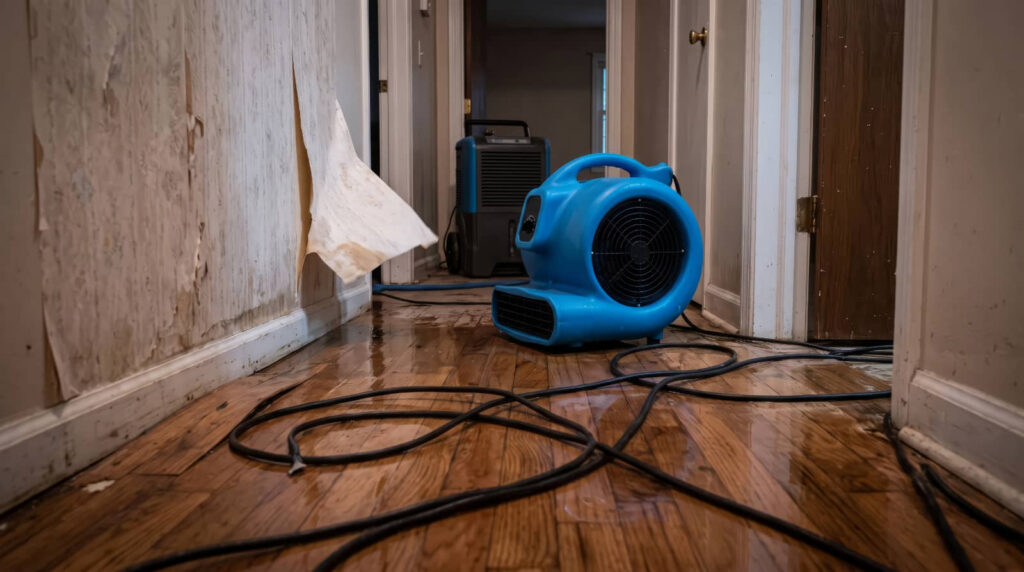
Basement Cleanup after a sewage backup can quickly become a serious task. You need to stop the source, remove unsafe items, dry the space, and disinfect every affected surface before damage spreads. Some materials can be saved, while others may need to be removed. Following the right cleanup sequence helps protect your structure, air quality, and the next steps in the restoration process.
Key Takeaways
- Shut off the main water, avoid drains, and call a plumber immediately to stop further sewage contamination.
- Wear gloves, boots, and a mask, then sort contaminated items from salvageable belongings.
- Pump out standing water, run fans and a dehumidifier, and keep humidity below 60%.
- Disinfect all hard surfaces with an EPA-registered cleaner, and remove drywall or porous materials with staining or odor.
- Inspect sewer lines, sump pumps, backwater valves, gutters, and downspouts to prevent future backups.
Stop Sewage Backup Safely First
If sewage is still backing up, shut off the main water supply immediately and avoid using any drains, toilets, or appliances until the source is contained.
You should then call your plumber or utility provider and report the issue clearly. If you know the cleanout location, keep clear access to it so a technician can inspect the line faster.
Don’t flush, run sinks, or start laundry while you wait. This keeps pressure from forcing more contamination inside. Stay calm; you’re handling the first critical step the right way.
After the source is controlled, you can begin sewage cleanup with safer conditions and better control.
For backup prevention, ask about root intrusion, damaged piping, and backflow protection so you and your household stay protected together.
Remove Unsafe Items From the Basement
Next, you’ll sort contaminated items from clean ones so you can assess each item safely.
Toss any damaged materials that can’t be disinfected or fully dried.
Move salvageable belongings to a dry, isolated area for later cleaning and storage.
Sort Contaminated Items
Sort contaminated items as soon as the area is safe to enter, since floodwater and sewage can leave materials unsalvageable and hazardous.
You’ll work faster if you set up clear item categorization: keep salvageable belongings, porous materials, and unknowns in separate zones.
Wear gloves, boots, and a mask, and follow safety precautions every time you touch wet surfaces or debris.
Label each pile so your team stays organized and no one rehandles contaminated pieces.
Inspect objects for visible sludge, odor, or saturation, but don’t shake them out indoors.
Group electronics, textiles, and documents apart so you can decide what needs professional cleaning.
When you sort with a steady system, you protect your household and help everyone feel in control together.
Toss Damaged Materials
Toss anything that can’t be safely cleaned or fully dried, including soaked drywall, insulation, carpet padding, ceiling tiles, and any item that held sewage or moldy water.
You should also remove damaged furniture with swollen joints, delaminated panels, or hidden saturation, because these materials can trap contaminants and weaken fast.
Bag debris before you carry it through clean areas, and seal each bag tightly.
Wear gloves, boots, and a respirator while you work, and keep children and pets away.
If you notice discoloration, odor, or fuzzy growth, stop and request a mold assessment so you can confirm what stays out.
You’re protecting your basement, your health, and your crew’s effort by clearing unsafe materials now.
Store Salvageable Belongings
Once you’ve set aside the damaged materials, move any salvageable belongings out of the basement so they can dry in a clean, controlled space.
Prioritize items with low contamination risk, like sealed plastics, metal tools, and intact furnishings. Use gloves, sanitize your hands, and inspect each item before you lift it.
Sort belongings into keep, clean, and monitor groups so you can track recovery. Apply salvage strategies by photographing contents, labeling boxes, and recording moisture exposure.
Choose storage solutions that raise items off the floor, improve airflow, and keep them away from walls. If you’re unsure about electronics, fabrics, or documents, isolate them until a professional can advise you.
You’re protecting your space and preserving what still belongs in your home.
Dry Out a Sewage-Backed-Up Basement
Start by removing all standing water with a pump, wet vac, or mop so the surface can begin drying.
Open windows and run fans to increase airflow, then use a dehumidifier to pull moisture from the air and materials.
Keep the area dry until humidity drops and all affected surfaces are fully dry.
Remove Standing Water
Pump out the standing water as soon as it’s safe to do so, using a submersible pump, wet/dry vacuum, or professional extraction equipment. You’re not alone here; quick removal limits structural damage and contamination spread.
Compare water extraction methods and choose the fastest fit for your basement’s depth and debris load. If you have sump pump options, verify they can handle sewage solids before you rely on them.
- Disconnect power before entering.
- Remove water from the lowest point first.
- Work in sections to keep control.
Keep hoses aimed to a sanitary drain or approved discharge point. Don’t leave puddles behind; hidden moisture can keep wicking into drywall and framing.
Stay methodical, and you’ll set up the next cleanup phase with confidence.
Ventilate And Dehumidify
After the standing water is out, open windows and doors if outdoor conditions allow, then run high-velocity fans and commercial dehumidifiers to pull moisture from the air and building materials.
Keep air circulation steady so damp zones don’t linger behind walls, under stairs, or along baseplates. You’ll get better moisture control if you point fans across wet surfaces, not directly into corners, and empty dehumidifier tanks often.
Check humidity with a meter; aim below 60% so mold can’t take hold. Remove wet carpet, pad, cardboard, and insulation that won’t dry quickly.
If odors stay strong or surfaces feel cool and tacky, keep drying equipment running. You’re not rushing this step—you’re protecting the space and everyone who uses it.
Disinfect the Basement After Cleanup
Once the basement is clean and fully dry, disinfect all affected surfaces to reduce the risk of mold, bacteria, and lingering contaminants. You’ll protect your space by using an EPA-registered disinfectant that matches the material you’re treating.
Focus on disinfecting surfaces such as floors, walls, shelves, and baseboards, then allow the product’s full contact time.
- Mix and apply the disinfectant exactly as labeled.
- Scrub porous buildup only if the product allows it.
- Rinse and dry nonporous areas before use.
Wear gloves and eye protection, and keep ventilation steady.
For sanitizing equipment, clean tools separately so you don’t spread residue back into the basement. Stay methodical; your home’s recovery depends on this step. You’re not alone in this process.
Decide What Can Be Saved
Before you bring anything back into the basement, sort each item by damage level and material. You can usually save sealed plastics, metal tools, glass, and hard-surface furniture if they dried quickly and kept their shape.
Check wood, fabric, and paper more carefully because they absorb moisture fast and may warp. To evaluate sentimental items, look for photo prints, keepsakes, or heirlooms that only need gentle cleaning or professional drying.
Consider restoration options when the item has value and the structure still feels sound. If you’re unsure, set it aside for a second review with your cleanup team.
This process helps you protect what matters, avoid guesswork, and make calm, practical decisions together. Trust your judgment, and keep the salvage pile organized.
Remove Contaminated Materials and Debris
Now that you’ve set aside salvageable items, clear out everything the backup contaminated. Wear safety equipment, including gloves, boots, and a respirator, before you touch any debris. Move damaged cardboard, soaked insulation, and porous materials into heavy-duty bags so you can keep the area controlled and support mold prevention.
- Bag waste immediately.
- Scrape up sludge and sediment.
- Separate sharp or broken items for safe disposal.
Work methodically from the farthest corner toward the exit, so you don’t spread contamination. If you find insulation, carpet, or drywall with visible staining or odor, remove it completely.
Keep your pace steady and your path clear. You’re not handling this alone; careful cleanup helps your basement feel safe, organized, and ready for the next stage.
Prevent Another Sewage Backup
To reduce the risk of another sewage backup, inspect the main sewer line, basement drain, sump pump, and backwater valve for blockages, damage, or failed seals.
Then schedule a camera inspection if you notice slow drains, gurgling, or recurring odors. Keep floor drains clear, test the sump pump monthly, and confirm the check valve closes fully.
You should also clean gutters, direct downspouts away from the foundation, and avoid flushing wipes, grease, or bulky waste.
This kind of backup prevention works best when you treat plumbing maintenance as routine, not reactive.
If you share a multi-unit building, coordinate repairs with neighbors or your property manager so everyone benefits from a safer system.
Stay alert, document changes, and call a licensed plumber if anything feels off.
Frequently Asked Questions
How Long Should You Wait Before Entering a Flooded Basement?
Wait until officials declare it safe, then ventilate the basement thoroughly and confirm flood safety. You shouldn’t enter if water covers outlets or structural damage exists; get help, then inspect with protective gear.
Can Insurance Cover Sewage Backup Cleanup Costs?
Yes, your insurance can cover sewage backup cleanup costs, but only if your insurance policies include that endorsement. You’ll avoid a money-eating swamp by checking coverage, limits, and exclusions before disaster strikes.
What Protective Gear Is Best for Basement Cleanup?
You’ll want protective gloves, safety goggles, waterproof boots, and a respirator mask. These shield your skin, eyes, feet, and lungs while you work, helping you stay safe, calm, and confident together.
Should Electrical Systems Be Checked After Basement Flooding?
Yes—have your electrical systems checked after flooding; don’t cut corners. You’ll protect electrical safety and spot hidden flood damage. A licensed electrician can test circuits, outlets, and panels, so you’re not left out in the cold.
How Do You Document Damage for a Claim?
You document damage by taking dated photos, listing affected items, and noting measurements, odors, and materials. During the Claim process, your Damage assessment should be organized, clear, and thorough so you’ll feel supported.
Summary
If you’ve handled the water, cleared the debris, and disinfected every surface, don’t relax just yet. One hidden issue can undo all your work: the plumbing itself. Keep watching for slow drains, odors, or damp spots, because those signs can mean another backup is building. Schedule routine inspections, protect your drains, and stay ready. With quick action and steady maintenance, you can keep your basement clean—and avoid the next surprise flood.