
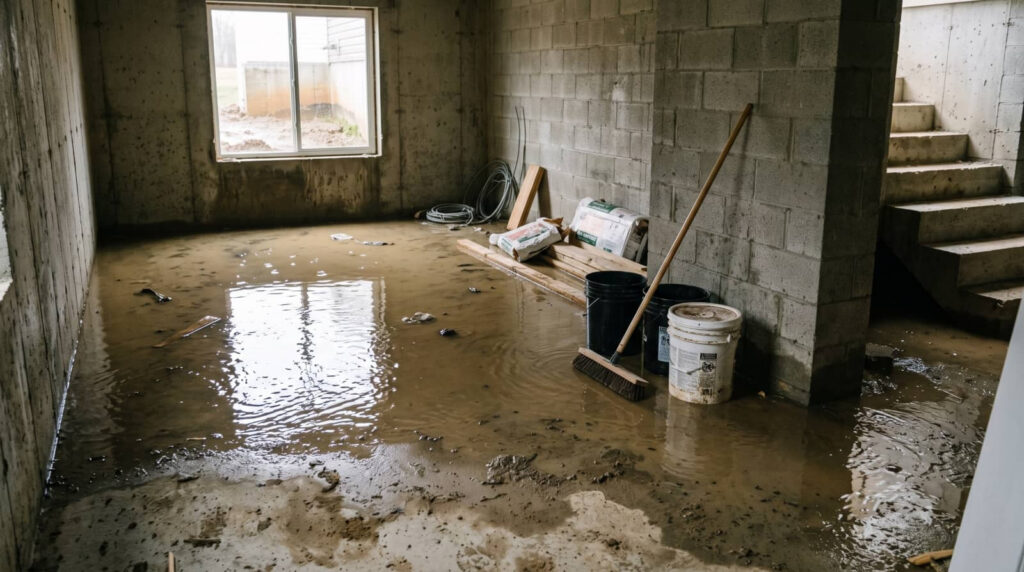
After a hurricane, you may find three inches of dark water in the basement with a sewage odor near the floor drain. Basement contamination should be treated seriously, starting with confirming the source, stopping further spread, and removing water only when it’s safe to do so. PPE, proper disinfection, and controlled drying are essential when contaminated water is involved. The next decision matters because what you do early can determine whether the space can be cleaned and safely reused.
Key Takeaways
- Treat basement floodwater as sewage-contaminated until tested; keep children, pets, and untrained people out.
- Document damage, contamination sources, and containment actions for insurers and authorities before cleanup.
- Pump out standing water and sludge quickly using trained responders, PPE, and proper waste-handling procedures.
- Clean and disinfect all exposed surfaces with EPA-registered products, following required contact times and ventilation.
- Dry the basement completely, remove unsalvageable porous materials, and inspect for structural, electrical, and moisture safety before reuse.
Check for Sewage Contamination First
Before you begin any basement cleanup, confirm whether sewage is present, because contaminated wastewater changes the hazard class, required PPE, and disposal method.
You should treat any dark, foul, or visibly contaminated water as suspect until sewage testing verifies otherwise. Inspect likely contamination sources such as floor drains, backed-up toilets, failed ejector pumps, and sanitary sewer seepage.
If you detect sewage, stop nonessential access and document conditions for your insurer or local authority. Use only trained responders who follow biohazard protocols, because you’re part of a community that protects itself through disciplined action.
Keep children and pets out, and don’t mix contaminated material with ordinary debris. Clear identification now reduces exposure, supports compliant handling, and helps your team move forward safely together.
Stop the Flood From Spreading
You should seal all basement entry points immediately to limit lateral water migration and prevent contaminated runoff from entering adjacent areas.
Install temporary barriers at cracks, penetrations, and door thresholds, and verify that seals remain intact under active flow conditions.
You should also redirect surface water away from the foundation using grading, downspout extensions, or diversion channels to reduce flood spread.
Seal Basement Entry Points
Seal every basement entry point to keep contaminated water from migrating into adjacent areas and hidden cavities. You should conduct an entry point inspection at wall penetrations, pipe sleeves, conduit gaps, cracks, and sump lids.
Document each defect, then apply sealing techniques that match the substrate and exposure conditions. Use non-shrink hydraulic cement for active seepage, polyurethane or epoxy for static cracks, and compatible sealants for joints and utility openings.
Verify full adhesion, continuous coverage, and cure time before reoccupancy. Install temporary barriers at door thresholds and utility chases if needed.
Wear required PPE, isolate electrical hazards, and keep materials within manufacturer specifications. When you seal these pathways correctly, you protect your team, support compliance, and help your space recover as one unit.
Redirect Surface Water
Redirect surface water away from the basement immediately to stop contaminated flow from spreading into the structure and adjacent low points.
You should regrade soil, clear gutters, and extend downspouts so runoff moves to approved discharge areas.
Install temporary water barriers at doors, window wells, and utility penetrations to interrupt overland flow.
Verify surface drainage paths stay unobstructed and slope away from foundations at all times.
If you can’t achieve positive drainage, use sandbags or berms to divert flow until permanent controls are in place.
Document each measure, because regulators and insurers may ask for evidence of source control.
Pump Out Water and Sludge Quickly
You should pump out standing water immediately to reduce contamination spread and limit saturation time.
Then extract sludge with suitable vacuum or pump equipment, following containment and waste-handling requirements to keep solids from re-entering the area.
Fast removal also helps prevent secondary damage to framing, finishes, and mechanical systems.
Rapid Water Removal
When standing water or contaminated sludge is present, pump it out as quickly as conditions allow to limit spread, reduce microbial growth, and support safe access for assessment and cleanup.
You should deploy approved pumps and discharge controls under local code, then verify that electrical hazards are isolated before entry. As you remove liquid, monitor structural stability, water absorption in porous materials, and any remaining pockets that could trap contaminants.
Use drainage solutions that direct flow away from occupied areas and toward lawful disposal points. Your team should document volumes removed, observe contamination indicators, and maintain PPE compliance throughout the operation.
Fast removal protects your space, supports the shared recovery effort, and helps your crew move into the next controlled cleanup phase with confidence.
Sludge Extraction Steps
Start sludge extraction by isolating hazards, confirming approved pump setup, and removing liquid and settled solids as quickly as site conditions permit.
You should match extraction methods to sludge types, using a trash pump for coarse debris and a vacuum unit for heavier deposits. Keep discharge hoses secured, prime equipment per manufacturer guidance, and verify that intake screens won’t clog.
You’ll need to skim free liquid first, then agitate compacted sludge only enough to maintain flow. Work from the deepest area toward the access point, and monitor levels so you don’t leave pockets behind.
Document each pass, track removed volumes, and stop only when visible sediment is reduced to the planned cleanup threshold and the space is ready for inspection by your team.
Prevent Secondary Damage
Prompt water and sludge removal as soon as conditions allow to limit seepage, corrosion, odor migration, and microbial growth. You’ll protect structural materials, reduce cleanup cost, and support mold prevention by shortening wet exposure.
Use a rated pump, vacuum truck, or extraction unit, and discharge only to an approved location under local rules. Keep foot traffic controlled so you don’t spread contaminants. Verify electrical isolation before entry, and document all volumes removed for compliance.
- Remove standing water first, then settled solids.
- Ventilate the area to improve air quality.
- Bag debris promptly and seal it for transport.
If you act quickly, you’ll help your team stay safer, maintain a cleaner work zone, and keep the basement ready for verified drying and inspection.
Disinfect All Sewage-Exposed Surfaces
After you remove all loose debris and standing water, disinfect every sewage-exposed surface with an EPA-registered antimicrobial cleaner labeled for sewage remediation.
You should follow sanitation protocols exactly: pre-clean, apply the disinfectant at the specified dilution, and maintain the required contact time before wiping or rinsing.
Wear gloves, eye protection, and boots, and keep the work area restricted to trained personnel only.
If you and your team handle materials consistently, you’ll support flood safety and reduce pathogen spread.
Treat floors, baseboards, fixtures, tools, and any washable items that contacted sewage.
Replace solutions when they become visibly dirty, and document each cleaned zone so your crew stays aligned.
Confirm the product label permits use on the surface material before you proceed.
Dry Walls, Floors, and Hidden Spaces
Once you finish disinfection, dry all walls, floors, and concealed cavities with industrial air movers and dehumidifiers so moisture doesn’t remain trapped behind finishes or inside framing.
You should monitor relative humidity, surface temperature, and airflow until readings meet drying targets. Inspect drywall materials for swelling, softening, or delamination, and open access points where needed to ventilate wall voids.
Verify that moisture barriers remain intact and that subfloors, sill plates, and joist bays are fully dried before reassembly. Keep equipment running continuously, document moisture trends, and follow local code and manufacturer guidance.
- Check corners and baseboards for dampness.
- Pull cabinetry away from walls for circulation.
- Share readings with your remediation team so everyone stays aligned.
Throw Out Contaminated Items Safely
With the structure dried, remove contaminated materials that can’t be effectively cleaned, disinfected, or restored.
You should sort items into disposal, salvage, and hold areas so you can control exposure and document loss.
Bag porous goods, insulation, carpet, paper, and food-contact items in heavy plastic, seal them tightly, and label them as contaminated materials.
Wear gloves, eye protection, and a respirator when handling waste.
Follow local rules for safe disposal, including special pickup for chemicals, batteries, electronics, and sharp debris.
Don’t compact waste or mix it with recyclables.
Keep pathways clear, wash hands after each load, and keep children and pets away from the work zone.
You’re protecting your household and your community by removing hazards with care.
Restore Basement Safety Before Reuse
Before you reuse the basement, verify that the structure is dry, stable, and free of remaining contamination. You should document moisture readings, inspect framing, and confirm that electrical systems meet code before occupancy.
Keep ventilation running until humidity stays below accepted limits, and apply safety precautions during final cleaning. If you detect odors, staining, or efflorescence, pause use and retest for mold, sewage, or chemical residues. These controls reduce health risks for your household and protect anyone who joins you in the space.
- Replace damaged insulation and porous finishes.
- Sanitize hard surfaces with approved disinfectants.
- Schedule a licensed inspection if conditions stay uncertain.
When you clear each checkpoint, you restore a safer basement and rejoin normal use with confidence.
Frequently Asked Questions
How Soon Should Insurance Be Contacted After Basement Flooding?
Contact your insurer immediately, ideally within 24 hours, to start insurance claims for flood damage. You’ll protect your coverage, document losses, and stay aligned with policy deadlines and cleanup requirements.
What Protective Gear Is Needed Before Entering a Flooded Basement?
You need waterproof boots, gloves, eye protection, and a respirator; add coveralls if contamination’s possible. Use proper safety equipment, and follow flood preparedness procedures before entering, so you’re protected and compliant.
Can Basement Electrical Systems Be Reused After Water Exposure?
No, you shouldn’t reuse basement electrical systems after water exposure, like trusting a soaked map. You need a licensed electrician to assess electrical safety and water damage, test insulation, and replace compromised components before re-energizing.
How Do I Test for Mold After Flood Cleanup Is Finished?
You’ll conduct mold testing using a certified inspector or lab, sampling air and surfaces for spores. Verify air quality against baseline levels, document findings, and keep results for compliance, remediation, and safe reoccupancy.
When Is Professional Cleanup Required Instead of DIY Efforts?
You need professional cleanup when flood damage exceeds 10 square feet of mold, sewage’s involved, or materials stay wet over 48 hours; you can’t meet cleanup protocols safely, so you’ll protect your team and home.
Wrap-Up
When you finish basement contamination cleanup after flood emergencies, you bring order back from the dark. You confirm sewage hazards, stop spread, pump out water, disinfect exposed surfaces, dry hidden spaces, and remove unsalvageable materials. Then you verify structural safety and document compliance before reuse. Treat the basement like a sealed system: if moisture, contamination, or instability remains, don’t reoccupy it. Your disciplined response protects health, limits liability, and restores safe use.