After water damage, mold can start growing within 24 to 48 hours, making prompt action vital. You’ll need to understand the conditions that foster mold development and recognize early signs of infestation. Knowing where to assess for moisture and how to employ effective drying techniques is essential. But what cleaning solutions work best, and when should you bring in professionals? Exploring these water cleanup questions can greatly affect your environment’s safety and health.
Key Takeaways
- Mold can develop within 24 to 48 hours after water exposure, so act quickly to mitigate growth.
- Inspect common areas like basements, bathrooms, and kitchens for signs of moisture and potential mold.
- Use fans and dehumidifiers to enhance air circulation and reduce humidity levels effectively.
- Seek professional help for extensive water damage or visible mold to ensure thorough remediation.
- Be alert for health symptoms, such as coughing and respiratory issues, which may indicate mold exposure.
Understanding Mold Growth After Water Damage
When water damage occurs, it’s vital to understand that mold can begin to grow within 24 to 48 hours if the conditions are right. The mold lifecycle starts with spores that thrive in damp environments, making your home vulnerable after water exposure.
Significant environmental factors include humidity, temperature, and organic material, which all support mold proliferation. If you’re not vigilant, mold can spread rapidly, compromising your health and property.
It’s important to control moisture levels and ensure proper ventilation to disrupt this lifecycle. Regular inspections and prompt cleanup can help maintain a mold-free environment, fostering a sense of belonging in your home.
Identifying Signs of Mold Infestation Early
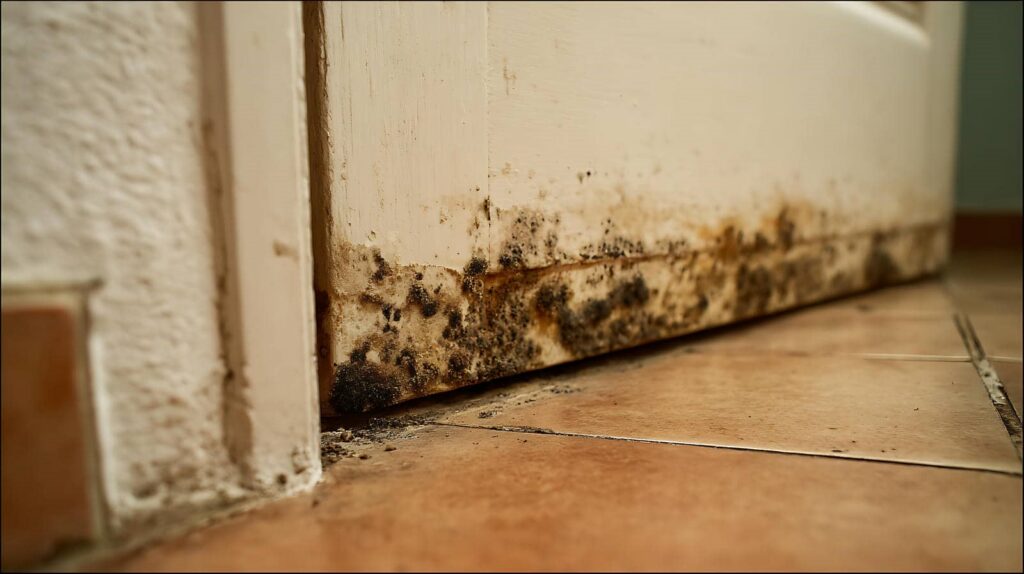
Recognizing the early signs of mold infestation can save you from extensive damage and health issues. Start by looking for musty odors, which often signal hidden mold growth.
Check for visible spots on walls, ceilings, or floors, especially in damp areas. Use mold detection techniques like moisture meters to assess humidity levels, as high moisture can indicate potential mold issues.
Pay attention to any allergic reactions among family members; sneezing or respiratory problems could be early warning signs.
Regularly inspect areas prone to moisture, such as bathrooms and basements, to catch any issues early.
Assessing Areas for Potential Mold Development
To effectively prevent mold growth, you need to assess areas in your home that are prone to moisture.
Identifying potential mold hotspots is essential for maintaining a safe environment. Here are key areas to inspect:
- Basements and crawl spaces: Often damp, these areas can harbor mold if not properly ventilated.
- Bathrooms: Check for leaks around sinks, tubs, and toilets.
- Kitchens: Inspect under sinks and around appliances for hidden moisture sources.
- Attics: Confirm proper insulation and ventilation to prevent condensation.
- Windows and doors: Look for signs of water intrusion or condensation buildup.
Top Drying Techniques to Prevent Mold
After identifying potential mold hotspots in your home, implementing effective drying techniques is essential to prevent mold growth.
Start by enhancing air circulation; open windows and use fans to promote airflow. This helps evaporate moisture quickly. Additionally, consider using dehumidifiers to extract excess humidity from the air.
Installing moisture barriers in areas prone to dampness can also shield your home from mold. These barriers prevent water vapor from penetrating walls and flooring, making it harder for mold to take hold.
How to Choose Effective Cleaning Solutions for Mold
When tackling mold cleanup, selecting the right cleaning solutions is crucial for effective removal and prevention. Here are key factors to take into account:
- Eco-friendly products: Opt for solutions that minimize environmental impact while effectively combating mold.
- Chemical effectiveness: Research the active ingredients to verify they’re potent against mold types you’re facing.
- Surface compatibility: Confirm the cleaner works well on various surfaces to avoid damage.
- Application methods: Choose solutions that fit your cleaning style, whether spray, wipe, or soak.
- Safety precautions: Read user reviews to gauge safety, especially if you have pets or children.
Don’t forget to weigh cost considerations against the benefits for a solution that meets your needs without sacrificing effectiveness or safety.
What Ventilation Strategies Help Keep Mold Away?
Effective ventilation is crucial for preventing mold growth, as it reduces humidity and promotes air circulation.
To achieve ideal airflow management, consider installing exhaust fans in high-moisture areas like kitchens and bathrooms.
Utilize natural ventilation by strategically placing windows to enhance cross ventilation; this allows fresh air to circulate through your home.
For attics, ensure proper attic ventilation to prevent heat buildup and moisture accumulation.
In basements, focus on improving basement airflow by using dehumidifiers and ensuring vents are unobstructed.
By implementing these strategies, you can achieve effective humidity control, making your living space less inviting for mold.
Prioritizing these ventilation techniques fosters a healthier environment for you and your loved ones.
How Humidity Control Helps Prevent Mold Growth?
Controlling humidity is essential for preventing mold growth in your home.
Keeping humidity levels between 30% and 60% reduces the risk of mold and creates a healthier living environment.
Utilizing dehumidifiers and effective ventilation strategies can greatly enhance your ability to maintain these ideal conditions.
Ideal Humidity Levels
Maintaining ideal humidity levels is essential for preventing mold growth, especially after water damage. Proper humidity measurement helps you keep moisture control in check, ensuring it falls within optimal ranges of 30-60%.
Here are some key factors to take into account:
- Seasonal adjustments: Monitor humidity changes throughout the year.
- Indoor plants: Be mindful that they can increase moisture levels.
- Air circulation: Improve airflow to reduce stagnant moisture.
- Building materials: Assess materials for moisture retention; some are more susceptible to mold.
- Weather patterns: Stay informed about local climate conditions that could affect humidity.
Dehumidifiers and Their Benefits
Dehumidifiers play an essential role in regulating indoor humidity, directly impacting mold prevention. By understanding different dehumidifier types, you can select the best fit for your space.
For ideal placement, position the unit in areas prone to moisture, like basements or bathrooms. Look for portable options that offer energy efficiency without compromising air quality.
Regular maintenance is key; clean filters and empty water tanks to ensure maximum moisture reduction. Additionally, consider noise levels, especially if you’ll use the dehumidifier in living spaces.
Ventilation Strategies to Employ
When humidity levels rise, creating effective ventilation strategies becomes crucial for preventing mold growth in your home. You can achieve this by focusing on airflow management to keep your indoor environment healthy.
Here are some strategies to take into account:
- Use exhaust fans in kitchens and bathrooms to reduce humidity.
- Open windows during dry days to promote natural ventilation.
- Implement cross ventilation by opening windows on opposite sides of your home.
- Maintain your HVAC systems for ideal air circulation.
- Think about using air purifiers to filter out mold spores.
Incorporating moisture barriers in areas prone to dampness can also enhance your efforts.
When to Call Professionals for Mold Remediation
When you notice signs of mold growth, such as discoloration or a musty odor, it’s time to take action.
Extensive water damage can create an environment ripe for mold, making professional help essential.
If you or anyone in your home experiences health symptoms like respiratory issues, don’t hesitate to call in experts for mold remediation.
Signs Of Mold Growth
Although mold can start growing within 24 to 48 hours after water exposure, recognizing its early signs ensures you can act promptly.
Here are some key indicators that mold might be developing in your space:
- Visible spots: Dark or discolored patches on walls or ceilings.
- Musty odors: A persistent damp smell often indicates hidden mold types.
- Health issues: Increased allergic reactions or respiratory problems in your household.
- Water stains: Yellow or brown stains on surfaces may signal moisture issues.
- Condensation: Excessive moisture on windows or walls can promote mold growth.
Extensive Water Damage
Recognizing the signs of mold growth is important, especially after experiencing extensive water damage. If you notice persistent dampness or musty odors, it’s time for a water damage assessment.
Calling professionals ensures thorough mold prevention methods are applied, including moisture barrier installation and appropriate building material selection. They can also improve air circulation, which is essential for maintaining indoor air quality.
After cleanup, a post cleanup inspection helps identify hidden mold risks, particularly during seasons prone to mold growth. Utilize a home inspection checklist to monitor areas at risk.
Health Symptoms Present
If you experience health symptoms like persistent coughing, sneezing, or skin irritation after water damage, it’s essential to act quickly.
Mold can trigger severe reactions, especially if you have mold allergies or compromised immune response. Recognizing the signs can help you decide when to call professionals for remediation.
Look out for:
- Respiratory issues, such as wheezing or shortness of breath
- Skin irritation, including rashes or itching
- Fatigue symptoms that linger beyond normal tiredness
- Cognitive effects like memory problems or difficulty concentrating
- Increased severity of existing allergies
Ignoring these symptoms can lead to long-term health problems.
Don’t hesitate; addressing mold promptly can help you reclaim your health and peace of mind.
Frequently Asked Questions
Can Mold Grow in Furniture After Water Damage?
Yes, mold can grow in furniture after water damage, especially in porous materials like wood and fabric. You should regularly inspect for mold detection to prevent growth and protect your living space from further damage.
How Quickly Can Mold Start Growing After Water Exposure?
Mold can start growing within 24 to 48 hours after water exposure. Understanding this mold growth timeline is essential; quick action helps mitigate the water exposure effects and limits potential damage to your belongings.
Are There Specific Mold-Resistant Products I Can Use?
You can use mold-resistant paints and antimicrobial sealants to protect your space. These products act like a shield, keeping mold at bay. Investing in them fosters a healthier environment for you and your loved ones.
Is It Safe to Use Bleach for Mold Cleanup?
No, it isn’t safe to use bleach for mold cleanup. While it can kill surface mold, it doesn’t prevent future mold growth. Consider bleach alternatives like vinegar or hydrogen peroxide for effective, safer solutions.
What Should I Do if I Smell Mold but Can’t See It?
If you smell mold but can’t see it, investigate possible odor sources like damp areas or water leaks. Surprisingly, some homes have hidden mold, so act quickly to prevent health risks and structural damage.
Recap
In a world where mold can sprout like a horror movie villain within just 24 to 48 hours, taking swift action is your best defense. By understanding mold growth, identifying early signs, and employing effective drying and ventilation strategies, you can thwart this insidious foe. Don’t underestimate the power of humidity control, and remember, when in doubt, calling in professionals can save your home—and your health—from becoming a mold-infested nightmare! Stay proactive and protect your sanctuary!